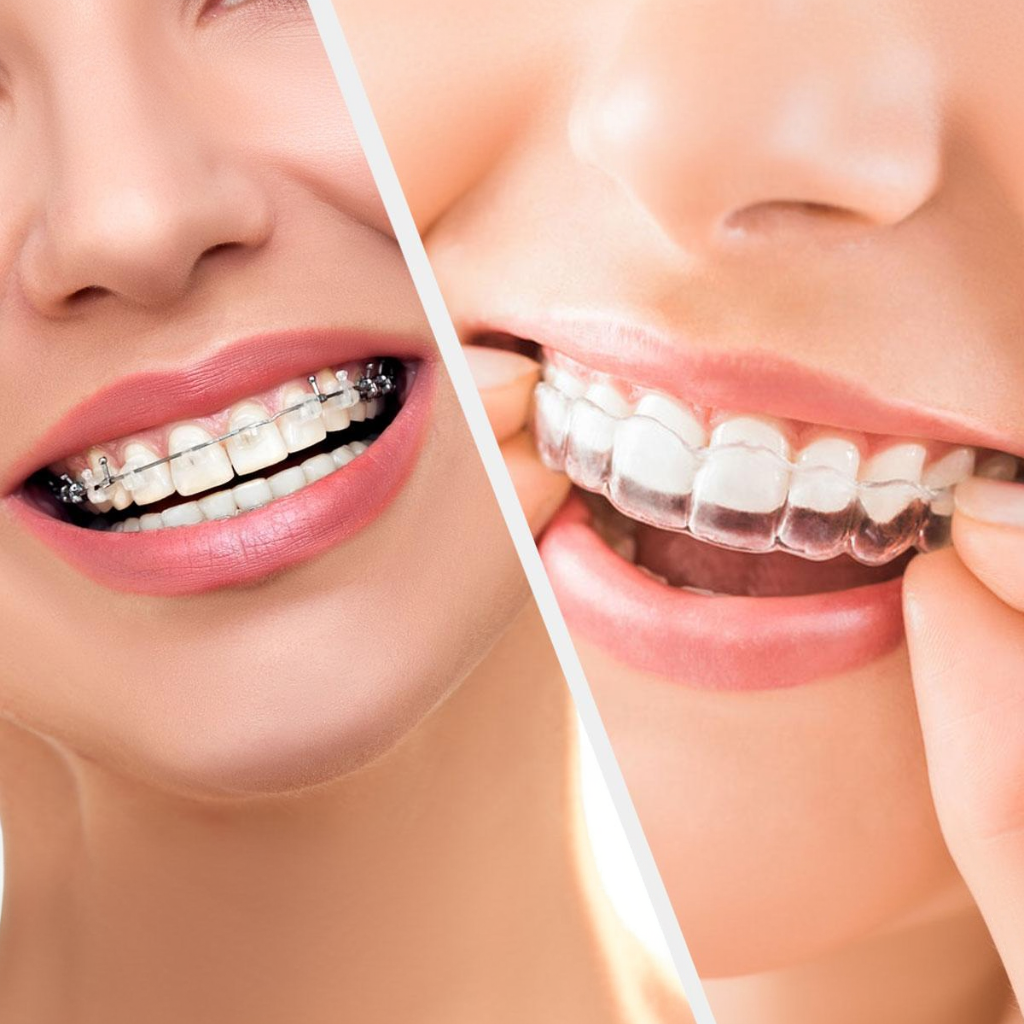
Whether you're playing football, soccer, volleyball, or basketball, Shimizu Orthodontics shares how to protect your braces and your smile all season long.
KEY TAKEAWAYS
- Athletes who don't wear a mouthguard are more than twice as likely to injure their teeth, mouth, or jaw than those who do.
- The National Federation of State High School Associations (NFHS) requires a mouthguard for any wrestler competing in braces, and for every athlete in football, field hockey, ice hockey, and lacrosse.
- Clear aligners are not protective equipment. They are thin trays built to move teeth, not to absorb impact.
- A mouthguard made to fit over braces costs far less than repairing one knocked-out tooth, and it accounts for brackets that shift as teeth move.
- This guide is built on 6 rules for playing sports with braces, and every one of them can be learned before the first whistle.
Introduction
A forward takes an elbow under the basket at Fremont High and comes off the court with a lip split open against a bracket. A club soccer player wraps her aligners in a napkin at a tournament in Santa Clara and never sees them again. A wrestler arrives at weigh-ins and learns he cannot step on the mat, because the rulebook requires a mouthguard for anyone competing in braces, and he does not own one.
We see all three of these every fall. Dr. Ken Shimizu and Dr. Kevin Shimizu are both Associate Professors at the University of the Pacific (UOP) dental school, and both serve on the Craniofacial Anomalies Panel at Kaiser Hospital, where they treat some of the most complicated cases in Santa Clara County. That is the work that shapes what we tell athletes. When you spend your career rebuilding bites after trauma and surgery, you stop thinking of a chipped tooth as bad luck and start thinking of it as something that was preventable a week earlier.
So here is the reframe. Braces do not bench athletes. Unprotected braces do.
Every athlete we treat plays their season. The ones who finish it without an emergency visit are simply the ones who got ready for contact before contact happened. Below are the six rules we give every patient who plays a sport.
Not one off the drugstore shelf
And which ones only should
Pack both, wear the right one
Keep it in the bag
Without missing the next game
Through the whole season
Rule 1: Get a Mouthguard Built for Braces, Not One Off the Drugstore Shelf
The mouthguard hanging on a pegboard at the pharmacy is designed for a mouth that is not changing. You drop it in hot water, bite down, and it molds to your teeth exactly as they sit that evening. The whole point of braces is that your teeth will not sit that way for long. Within a few weeks, the fit has drifted, and a guard that no longer matches your arch can press against brackets instead of shielding them.
A guard made for braces is built differently. It carries extra material across the front surface where brackets sit, it leaves channel space so teeth can keep moving underneath, and it is thick enough at the biting surface to spread a hit rather than transmit it.
Choosing a Guard
KNOW: A guard made for braces covers the brackets on the upper arch and still leaves room for teeth to move underneath it.
ASK: Bring your current guard to your next adjustment, and we will check the fit against where your brackets sit today.
AVOID: Trimming or reshaping a guard at home. Cutting it thinner removes the exact material that was doing the protecting.
Rule 2: Know Which Sports Require a Mouthguard and Which Ones Only Should
There is a short list of sports where a mouthguard is not optional. The National Federation of State High School Associations position statement mandates them in football, field hockey, ice hockey, and lacrosse, and requires one for any wrestler competing while wearing braces. California high school teams compete under the California Interscholastic Federation (CIF), which follows NFHS rules, so athletes across the Fremont Union High School District are held to exactly that standard.
If you play a sport where there's a chance of contact, wearing a mouthguard is one of the best ways to protect your smile. While some sports require mouthguards, many others leave the decision up to the athlete. That doesn't mean the risk of injury is any lower.
Whether you play football, basketball, soccer, volleyball, baseball, softball, wrestling, lacrosse, or another sport, a properly fitted mouthguard can help protect your teeth, braces, and the progress you've made during treatment. It's a simple step that can help prevent injuries and keep your smile on track all season long.
Even in sports that aren't considered contact sports, dental injuries can still happen. They're less common than in football or hockey, but they're far from rare. Research found that about 1 in 20 athletes in non-contact sports still experience a dental injury. That's a good reminder that a mouthguard is a smart choice for any sport where there's a chance of getting hit in the face or mouth.
Rule 3: Aligners Are Not Mouthguards, So Pack Both
This is the single most common misunderstanding we hear, and we understand why. Invisalign trays cover the teeth. A mouthguard covers the teeth. They look like they do the same job. They do not. An aligner is thin thermoplastic engineered to apply gentle, sustained pressure in a very specific direction. A mouthguard is thick, resilient material engineered to take a sudden load and spread it out. Asking a tray to do a guard's job is like asking a windbreaker to work as a helmet.
So the routine for sports with aligners is simple. Trays out, into the case, guard in, then reverse it at the final whistle. The one wrinkle is wear time. Aligners want twenty to twenty-two hours a day, and a long practice plus a game eats into that. Make it up in the evening, because a few skipped hours a week compounds into a delayed finish.
- Nothing comes off before the game. Brackets and wires stay put.
- A mouthguard with room built in for brackets goes on top.
- The injury we treat most: lips and cheeks cut against brackets on impact.
- The thing most often lost: a bracket, knocked loose and swallowed or spat out.
- Ignoring it costs you an emergency visit and possibly added months.
- The trays come out every single time and go straight into a case.
- A mouthguard goes in instead. The trays are not protective equipment.
- The problem we see most: trays cracked from being worn during contact.
- The thing most often lost: a tray, wrapped in a napkin and thrown away.
- Ignoring it costs you wear hours and possibly a replacement tray.
Lost Aligner, Cracked Tray, Forgotten Case
LOST ALIGNER: Go back to your previous tray so your teeth hold their position, then call us the same day.
CRACKED TRAY: If it still seats fully, keep wearing it and call us. Do not throw it out before we have seen it.
FORGOTTEN CASE: Never wrap a tray in a napkin or a towel. Napkins get cleared off benches and tables, and the tray goes with them.
PLACE: Keep a spare case zipped into the equipment bag permanently, not in the car and not on the kitchen counter.
Rule 4: Build a Game Day Kit and Keep It in the Bag
Almost every mid-season emergency we handle traces back to something small sitting at home. Wax in a bathroom drawer. A spare case on a dresser. The fix is to stop treating these as things you remember and start treating them as things that live in the bag. Build the kit once and check it the way you check cleats. Many of the supplies are the same ones we keep on hand as preferred products in the office.
Game Day Kit
- PACK: Mouthguard, orthodontic wax, a spare aligner case, a small mirror, a water bottle, and your previous set of aligners if you wear them.
- PLACE: Inside the equipment bag, in the same pocket every time, so it travels to away games without anyone thinking about it.
- BEFORE: Rinse the guard in cool water and look it over for cracks or thin spots before warm-ups start.
- AFTER: Rinse it again, let it air dry, and keep it out of a hot car. Heat warps the fit, and a warped guard is a guard that no longer protects.
Rule 5: Handle a Loose Bracket or Poking Wire Without Missing the Next Game
Here is the reassuring part. Almost everything that happens to braces during a season is not an emergency. It is an inconvenience with a known fix, and knowing the fix is the difference between a calm evening and a panicked search for an after-hours number.
If still on wire, leave it. Cover with wax. Call us.
Press flat with spoon or eraser, cover end with wax.
Find it if you can. Bring it with you.
Cutting wire at home. Clippers are not sterile.
Keep a small container of orthodontic wax in your sports bag so it's always there when you need it. If a bracket or wire becomes uncomfortable after practice or a game, wax can provide quick relief until we can see you. And if you're ever unsure whether something needs attention, just give our office a call. We're always happy to help you decide on the best next step.
Rule 6: Protect the Treatment Timeline Through the Whole Season
Seasons are busy, and the appointment that gets moved is usually the orthodontic one. We understand the logic, and we would still push back on it. Adjustments are what keep the plan moving, and skipping them is the most common reason a course of treatment runs longer than it was supposed to. An athlete who holds their appointment schedule through a season finishes on time. An athlete who pushes three visits into the following months does not.
The same applies once the braces come off. A retainer is built to hold a position, not to take an impact, so it never goes onto the field in place of a guard. Keep the retainer in its case during play and the mouthguard in your mouth.
Before and After Practice
BEFORE: Brush, then put the mouthguard in before warm-ups rather than at the first whistle. Most contact in practice happens before anyone considers it a game.
AFTER: Rinse with plain water before anything else, especially after a sports drink or a gel.
KNOW: Sugar and acid pool around brackets, which is why decay during treatment tends to show up in athletes mid-season.
DO: Keep your adjustment appointments through the season. This is the single highest-return habit on this entire list.
That is what we mean when we talk about a happy smile and SO much more. The smile is the visible part. The rest of it is a season played fully, a timeline that held, and a family that never had to make a frantic phone call.
Why Sunnyvale Families Trust Us with Their Athletes
- Two orthodontic specialists in one practice, in the same location since 1968. Dr. Ken has practiced on West Fremont Avenue for more than 35 years, and Dr. Kevin joined him after his residency.
- More than 25 years of combined experience in private practice and teaching. Both doctors are Associate Professors at UOP, which means the standards they teach are the standards they treat by.
- Complex case experience that matters most after an injury. Both serve on the Craniofacial Anomalies Panel at Kaiser Hospital, so a fractured tooth or displaced appliance is familiar territory.
- More than 100 local dentists and their own family members treated here. When the people who practice dentistry in this area need an orthodontist, many of them drive to Fremont Avenue.
- Diamond Plus and Top 1% Invisalign Provider. That places us in the highest tier of aligner providers nationally, which matters for any athlete weighing trays against brackets.
Conclusion
The Season Is Not the Risk. Skipping the Preparation Is.
If your athlete plays a sport and wears braces or aligners, none of this requires a hard decision. It requires a guard that fits, a kit that lives in the bag, and appointments that stay on the calendar. Do those three things and the six rules above take care of themselves. If you would like us to look at what your athlete is currently using, we are glad to, and your first visit with us costs nothing.
Frequently Asked Questions
Can you play contact sports with braces?
Yes. Braces do not disqualify an athlete from any sport, as long as a mouthguard made to fit over braces is worn during play. Call our Sunnyvale office at 408-738-1314, and we can scan for one at your next appointment.
Do you need a mouthguard with Invisalign or clear aligners?
Yes. Aligners are thin trays built to move teeth, not to absorb impact, so they should come out and go into a case before contact begins. Put the mouthguard in instead, and put the trays back in as soon as play ends.
Will a drugstore boil-and-bite mouthguard work over braces?
Usually not well. A boil-and-bite guard molds to your teeth at one moment in time, and teeth in braces keep moving, so the fit degrades within weeks and the guard can begin pressing on brackets rather than shielding them.
What should you do if a bracket comes loose during a game?
Cover it with orthodontic wax and call our office on West Fremont Avenue at 408-738-1314 the same day. If the bracket is still attached to the wire, leave it in place rather than pulling it off.
Does getting a sports mouthguard require a separate appointment?
No, we can usually handle it during a visit you already have scheduled. Bring your current guard to your next adjustment at our Sunnyvale office, and we will check it against your bracket position before deciding whether a new one is needed.
Sources
- Fernandes, L. M., et al. (2019). The use of mouthguards and prevalence of dento-alveolar trauma among athletes: a systematic review and meta-analysis. Dental Traumatology. DOI: 10.1111/edt.12441. Read full study.
- Lima, et al. (2024). Comparative analysis of dental trauma in contact and non-contact sports: a systematic review. Dental Traumatology. DOI: 10.1111/edt.12959. Read full study.
- Azadani, et al. (2023). Traumatic dental injuries in high school athletes in the United States of America from 2005 to 2020. Dental Traumatology. DOI: 10.1111/edt.12800. Read full study.
- American Dental Association. Athletic Mouth Protectors (Mouthguards). View patient resource.
- National Federation of State High School Associations. Position Statement and Recommendations for Mouthguard Use in Sports. View position statement.
This article is provided for general educational purposes and is not a substitute for professional orthodontic or medical advice, diagnosis, or treatment. Always consult a licensed orthodontist or dentist regarding your individual care. Mouthguard requirements vary by sport, by league, and by state athletic association, and any dental injury sustained during athletic activity should be evaluated in person as soon as possible.