Discover how bite alignment and jaw development can influence your airway, and why Shimizu Orthodontics evaluates more than just your smile during orthodontic treatment.
Straightening teeth alone does not treat sleep apnea. Breathing can be affected by jaw size and shape and the space behind the tongue, and some orthodontic treatment changes those structures. In a growing child, widening a narrow upper jaw sometimes helps, though the research is mixed. In an adult, a custom appliance that holds the lower jaw forward is an accepted treatment when a physician prescribes it. Orthodontists screen for warning signs and refer patients for testing. Only a physician can diagnose sleep apnea.
- Straight teeth and an open airway are not the same thing. Alignment by itself is not a treatment for sleep apnea.
- Orthodontists screen and refer. Diagnosis requires a physician and a sleep study.
- According to the American Academy of Pediatrics, sleep apnea affects about 1% to 6% of children. When enlarged tonsils or adenoids are blocking a child’s airway, removing them is usually the first treatment doctors recommend.
- Palatal expansion can widen a child’s narrow upper jaw. However, research shows that its effect on sleep apnea varies widely, so it should not be presented as a guaranteed treatment.
- For adults who cannot comfortably use a CPAP machine, a sleep doctor may prescribe a custom oral appliance. A qualified dentist fits and adjusts the device to help keep the airway open during sleep.
Your daughter snores loudly enough that you can hear it from the hallway. She sleeps with her mouth open, wakes up tired, and her teacher has mentioned she fades in the afternoon.
Somewhere in the middle of all that, someone told you braces might help.
Dr. Ken Shimizu has taught first-year orthodontic residents at the University of the Pacific for more than 30 years, and Dr. Kevin Shimizu also serves on the university’s orthodontic faculty. Both doctors advise and treat patients alongside the Santa Clara Kaiser cleft lip and palate team, where jaw structure and breathing often go hand in hand. That combined experience shapes how they approach this question.
So here is the honest answer, which is more specific than yes and more useful than no. Teeth are not the part of your anatomy that carries air. Jaws sometimes are.
What Does Your Bite Actually Have to Do With Breathing?
The connection is not the teeth themselves. It is the bone and soft tissue around them.
Your upper jaw, the maxilla, forms the roof of your mouth and the floor of your nose. It is one structure doing two jobs. A narrow upper jaw means a narrow nasal floor sitting directly above it.
Your lower jaw carries your tongue. Where the lower jaw sits determines where the tongue rests, including at night when the muscles relax and gravity pulls everything backward.
Crowded or crooked front teeth, on their own, do not narrow any of that. A crooked incisor is a tooth problem. A narrow palate or a set-back lower jaw is a skeletal one, and skeletal is the category that touches breathing.
Can Braces or Clear Aligners Treat Sleep Apnea?
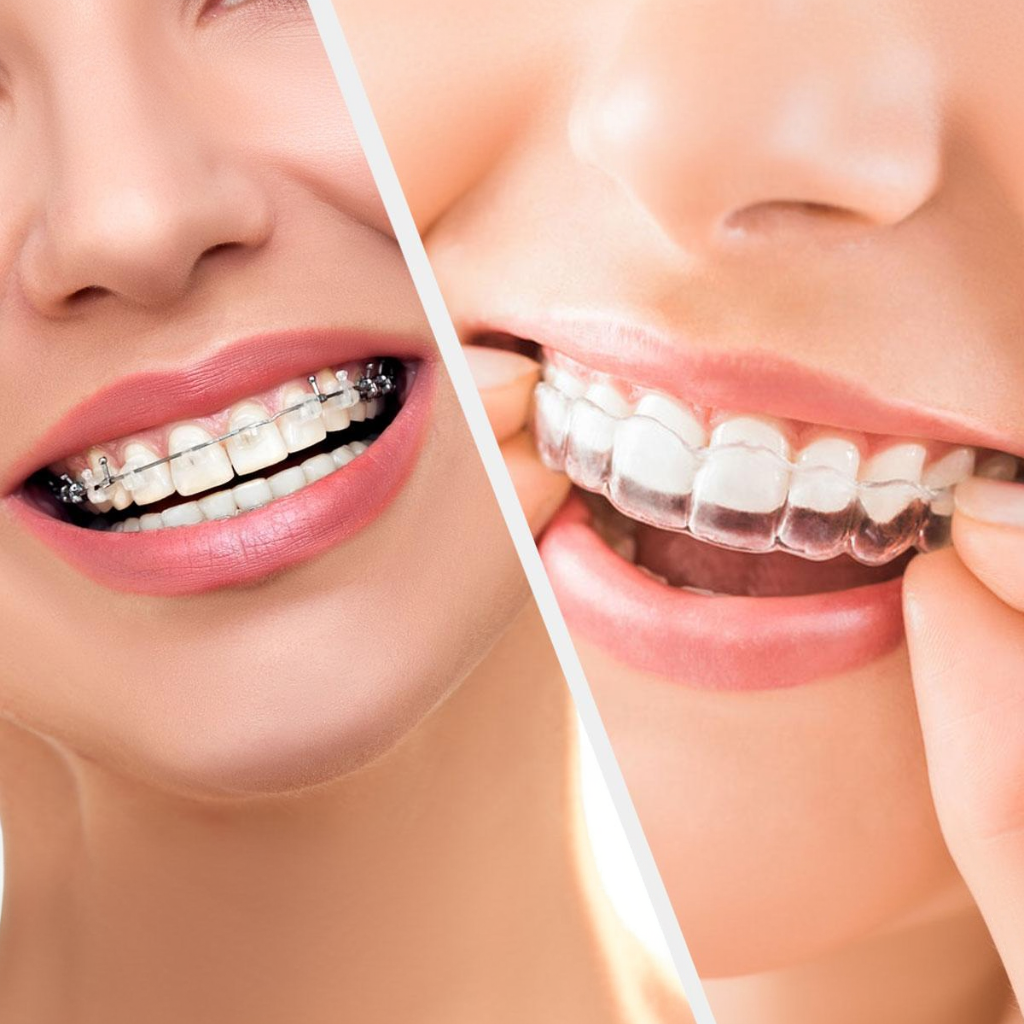
No. Braces, clear aligners, and clear trays move teeth through bone. They do not enlarge the airway, and no major professional organization lists them as a treatment for obstructive sleep apnea.
What they do is real and worth having. Braces and Invisalign correct crowding, close spaces, fix how the teeth meet, and make the mouth far easier to keep clean. None of that is an airway intervention, and we do not present it as one.
If anyone tells you that straightening your teeth will cure your snoring, ask what evidence supports it. The answer should be specific and involve a physician.
Can an Orthodontist Diagnose Sleep Apnea?
No. An orthodontist can screen, which matters, but diagnosing obstructive sleep apnea requires a physician and a sleep study.
The American Association of Orthodontists states it plainly: orthodontists cannot diagnose and treat obstructive sleep apnea independently, although they may be the first medical professionals to recognize the symptoms.
We see children every few weeks for years at a stretch, often more often than they see their pediatrician. That puts us in a useful position to notice a pattern, but not in a position to name a diagnosis.
These are the things worth mentioning to us or to your pediatrician.
- Snoring most nights, loudly enough to hear from another room
- Gasping, snorting, or pauses in breathing during sleep
- Sleeping with the mouth open, or waking with a dry mouth
- Restless sleep, unusual sleeping positions, or a lot of tossing
- Daytime sleepiness, or trouble concentrating in the afternoon
- Bedwetting that continues past the age you would expect
- Frequent stuffiness, or a nose that never seems to clear
How Jaw Development Affects a Growing Child’s Airway
In a growing child, the upper jaw can be widened. That is the one place where orthodontics genuinely changes airway anatomy rather than just tooth position.
The two halves of the upper jaw are joined by a suture down the middle of the palate. In children, that suture has not fused, so a palatal expander can separate it gradually and new bone fills in the gap.
This is standard orthodontic care for a narrow upper jaw, crossbites, and crowding, and it is part of early orthodontic treatment at our office. It also widens the floor of the nose, which is why it comes up in every conversation about children and breathing.
What the Research Actually Says About Expanders
That is the range of resolution rates reported across studies of rapid maxillary expansion for pediatric obstructive sleep apnea, according to a 2026 systematic review update in the Journal of Clinical Medicine. Most studies clustered around 30 to 40 percent. The reviewers rated the overall certainty of the evidence as low to very low, and the one trial comparing expansion against watchful waiting found no significant difference between them.
What it means for you: expanders are a legitimate orthodontic treatment with real skeletal effects, and they are not a dependable cure for a child’s sleep apnea. Anyone promising otherwise is ahead of the evidence.
We still use expanders, and often. We use them because a narrow upper jaw creates crossbites, crowding, and bite problems that are much harder to fix later. If breathing improves as well, that is welcome. It is not the promise. You can see how expanders fit into the broader picture on our treatments page.
For children whose sleep apnea is caused by enlarged tonsils and adenoids, the American Academy of Pediatrics recommends removing the tonsils and adenoids as the first treatment. That is a conversation to have with an ear, nose, and throat specialist.
Why We Pay Attention to Mouth Breathing
Persistent mouth breathing is a signal, not a diagnosis. It usually means air isn't moving easily through the nose, and the reason is worth finding.
Common causes include enlarged tonsils and adenoids, chronic nasal congestion, a deviated septum, and seasonal allergies, a familiar spring problem across the South Bay. We notice the pattern and say something.
You may have read that mouth breathing changes the shape of a growing face. Researchers have debated that relationship for decades, and it is not settled. What is not debated is that a child who cannot breathe through the nose should be evaluated by someone who can find out why.
What Orthodontics Can and Cannot Do for Adults With Sleep Apnea
For adults, the sutures are fused and the jaws no longer widen. What remains is jaw position during sleep, and dentistry has an accepted role there.
A mandibular advancement device is a custom appliance worn at night that holds the lower jaw slightly forward, which keeps the tongue and soft tissue from collapsing backward. Sleep medicine guidelines support these appliances for adults who cannot tolerate CPAP or who prefer an alternative.
The sequence matters. A sleep physician diagnoses the condition and prescribes the appliance. A qualified dentist fits it. The physician then repeats sleep testing to confirm it is actually working.
The table below is the short version of who does what.
| Approach | What it actually does | Who directs it |
|---|---|---|
| Braces, aligners, or clear trays | Straightens teeth and corrects the bite. Does not enlarge the airway. | Orthodontist |
| Palatal expansion in a growing child | Widens a narrow upper jaw and the floor of the nose. Evidence for sleep apnea is mixed. | Orthodontist, with a physician involved when breathing is the concern |
| Adenotonsillectomy | Removes enlarged tonsils and adenoids. First-line treatment for most childhood cases. | Ear, nose, and throat surgeon |
| Mandibular advancement device (adults) | Holds the lower jaw forward at night to limit airway collapse. | Prescribed by a sleep physician, fitted by a qualified dentist |
| Orthognathic (jaw) surgery | Repositions the jaws. Can change airway dimensions in selected severe cases. | Oral surgeon and orthodontist, with the medical team |
| CPAP and medical management | Keeps the airway open with pressurized air. Standard treatment for many adults. | Sleep physician |
What Happens if Breathing Comes Up at Your Visit
We look, we ask, and we tell you what we saw.
During an exam, we can see the width of the palate, how the upper and lower jaws relate, whether the tonsils are visibly large, and whether the lips rest together or apart. Our 3-D imaging and digital scanning give us a clearer view of the structure than a photograph would.
Then we tell you what we noticed and, when it is warranted, suggest you raise it with your physician. We already coordinate closely with our patients’ general dental teams, and we apply the same habit to a different question. You can read more about how we work on our what sets us apart page.
Why Families Choose Us
- Faculty-level training in growth and development. Dr. Ken Shimizu has served as course director for first-year residents at the University of the Pacific Department of Orthodontics for more than 30 years, and Dr. Kevin Shimizu is current faculty in the same program. Jaw growth is the subject they teach.
- Craniofacial experience. Our doctors serve as advisors to the Santa Clara Kaiser cleft lip and palate team. Cleft care is where jaw structure, nasal anatomy, and breathing are inseparable, and that work shapes how we look at every growing patient.
- We tell you what we do not know. We screen for warning signs and refer. We do not diagnose sleep apnea, and we do not sell appliances as cures for conditions we are not licensed to diagnose.
- Imaging that shows structure, not just teeth. 3-D radiographic imaging and iTero digital scanning let us evaluate palate width and jaw relationships properly, rather than estimating from a flat picture.
- A team that has watched a lot of faces grow. Our employees average more than 20 years of service in this office. Continuity matters when the whole point is noticing what has changed since last visit.
- Appointments that fit a school morning. We open at 7:30 a.m. Monday through Thursday.
- Coordination with the rest of your care. We stay in close contact with our patients’ general dentists, and we are comfortable being one voice among several when a breathing question needs a physician.
Straightening your teeth will give you a better bite, a mouth that is easier to keep clean, and a smile you are glad to show. It will not, by itself, open your airway. The part of orthodontics that touches breathing is the part that changes bone: widening a narrow upper jaw while a child is still growing, or holding an adult’s lower jaw forward at night. Both of those belong in a conversation that includes a physician. If someone in your house snores every night, start there, and let us look at the structure.
Come See Us in Sunnyvale
At Shimizu Orthodontics, we know that your smile should bring you happiness. We also think you deserve a straight answer about what orthodontics can and cannot do for your sleep.
Consultations are free. Bring your questions, and bring anything your pediatrician or physician has already told you. Request a consultation or call us at (408) 738-1314.
Shimizu Orthodontics
877 West Fremont Avenue, Suite G-1, Sunnyvale, CA 94087
Phone: (408) 738-1314
Hours: Monday through Thursday, 7:30 a.m. to 5:00 p.m. Closed Friday.
www.shimizuortho.com
Serving families throughout Sunnyvale, Cupertino, Santa Clara, Mountain View, Los Altos, and the surrounding South Bay.
Frequently Asked Questions
Can braces fix sleep apnea?
No. Braces move teeth through bone and do not enlarge the airway, so they do not treat obstructive sleep apnea. Orthodontic treatment that changes jaw size or position can affect breathing, but that is a different conversation, and a physician must make the diagnosis.
Can an orthodontist diagnose sleep apnea?
No. The American Association of Orthodontists states that orthodontists cannot diagnose and treat obstructive sleep apnea independently. An orthodontist can screen for warning signs during a routine exam and refer you for a sleep study, which is how the condition is actually diagnosed.
Does a palatal expander help a child breathe better?
Sometimes, and the evidence is less settled than most articles suggest. A 2026 systematic review found resolution rates across studies ranging from 7 percent to 94 percent, with low to very low certainty overall. Expanders remain a useful orthodontic tool, but they are not a reliable treatment for pediatric sleep apnea.
At what age should a child be evaluated if we are worried about breathing?
The American Association of Orthodontists recommends a first orthodontic check-up by age 7. That does not mean braces at 7. It means an orthodontist can look at jaw growth, palate width, and bite development while the bones are still responsive, and flag anything worth raising.
What kind of oral appliance do dentists use for adult sleep apnea?
Dentists use a custom-made device that gently holds the lower jaw forward to help keep the airway open during sleep. It may be recommended for adults who cannot comfortably use CPAP. A sleep doctor prescribes it, a qualified dentist fits and adjusts it, and follow-up sleep testing confirms whether it is working.
Sources
- Palomo, J. M., Cohen-Levy, J., Flores-Mir, C., Khosravi, R., Levine, M., Pickard, M., Hittner, J., Callahan, J., and Siegel, S. M. (2026). Sleep-disordered breathing and orthodontics: An American Association of Orthodontists white paper update. American Journal of Orthodontics and Dentofacial Orthopedics , 169(4), 419 to 427. DOI: 10.1016/j.ajodo.2026.01.014. View on PubMed
- Fernández-Barriales, M., López de Luzuriaga, M., Lafuente-Ibáñez de Mendoza, I., et al. (2026). Controlled Prospective Evidence of Rapid Maxillary Expansion Efficacy in Pediatric Obstructive Sleep Apnea: A Systematic Review Update. Journal of Clinical Medicine , 15(8), 2976. DOI: 10.3390/jcm15082976. Read the review
- Marcus, C. L., Brooks, L. J., Draper, K. A., et al. (2012). Diagnosis and Management of Childhood Obstructive Sleep Apnea Syndrome. Pediatrics , 130(3), 576 to 584. DOI: 10.1542/peds.2012-1671. American Academy of Pediatrics
- American Academy of Sleep Medicine and American Academy of Dental Sleep Medicine (2015). Clinical Practice Guideline for the Treatment of Obstructive Sleep Apnea and Snoring with Oral Appliance Therapy: An Update for 2015. Journal of Clinical Sleep Medicine , 11(7). DOI: 10.5664/jcsm.4858. AASM guideline announcement
- American Association of Orthodontists. Breathing Easy: How Orthodontics Can Alleviate Sleep Apnea. aaoinfo.org
- National Heart, Lung, and Blood Institute. Sleep Apnea. nhlbi.nih.gov